Two-Way Messaging Available! Text Us At: (602) 840-0111
Download our NEW Mobile App!
Get Healthy!
- Posted March 12, 2026
Pediatric Allergy Specialist: Feed Babies Allergenic Foods Earlier, Not Later
In January 2026, the U.S. Department of Agriculture released new Dietary Guidelines for Americans, 2025-2030.
Its main message is to promote diets that include whole foods high in protein and full-fat dairy while minimizing ultra-processed foods. As a pediatric allergist/immunologist, I am pleased to see the inclusion of food allergy prevention advice for infants.
Unfortunately, this information is buried deep within the document, outdated and lacks important rationale and details that are discussed below.
On page 5 of 8 within the new guidelines, there is a section titled “Special Populations & Considerations” with a subheading “Infancy & Early Childhood (Birth-4 Years).” Along with a discussion of the benefits of breast feeding, this section suggests introducing solid foods at 6 months of age.
The authors incorrectly classify babies with egg allergy as "high risk," whereas severe eczema is the highest risk factor for developing food allergy.
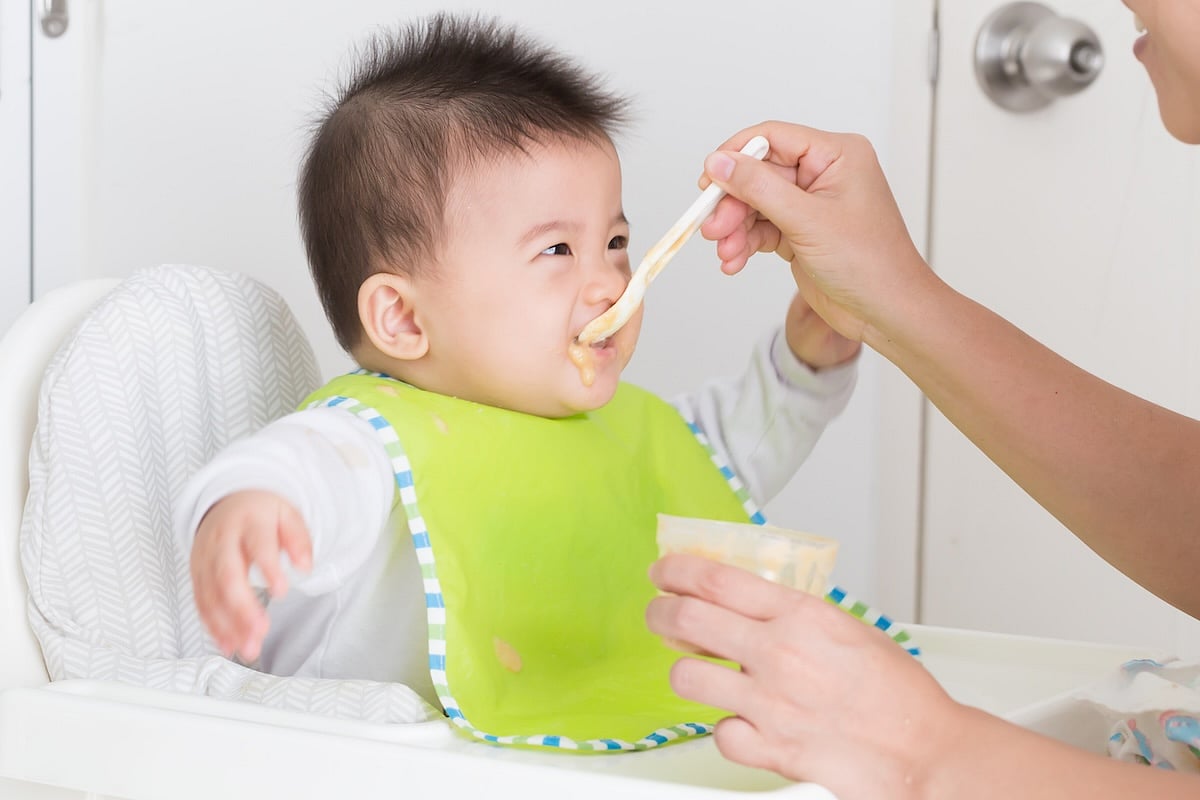
In addition, parents should be advised to introduce allergenic foods such as peanut, egg, milk, tree nuts and seafood to all infants, beginning around 4 to 6 months of age. This has proven to be safe and highly effective in reducing the development of food allergy.
The story of flip-flopping infant feeding guidelines and the rise in food allergies has received a lot of attention in recent years.
In 2000, the American Academy of Pediatrics advised parents to avoid giving dairy to infants until 1 year of age, no eggs until age 2, and no peanuts, tree nuts or seafood until age 3.
This was based upon then-current expert opinion. It made sense, based on the knowledge at the time, to recommend avoidance to protect infants. Unfortunately, this advice was wrong.
Over the next 20 years, new evidence evolved to support an opposite approach. The landmark LEAP trial published in 2015 was the first study to show a dramatic reduction in peanut allergy by feeding peanuts early and keeping them in the diet. Current guidelines and dozens of additional studies all support this as well.
In 2017, added guidelines recommended testing for peanut allergy prior to introduction for babies who have severe eczema and/or egg allergy. It turns out, this advice was also wrong. It’s no wonder parents are frustrated with these changing recommendations.
But that is how science works -- new approaches should replace older advice based upon new evidence. Science is never “done.” We rarely have final answers to anything. Science evolves and improves our understanding, which is a benefit for all of us.
Since 2017, there have been dozens of additional studies and new guidelines have evaluated the timing of introduction for common allergens including milk, egg, peanut, tree nuts, soy, wheat, sesame and seafood.
Here are the four main messages for parents and pediatricians for preventing food allergies:
All infants should start eating allergenic foods around 4 to 6 months of age, once they have demonstrated the ability to eat other solids, such as purees and cereals. Persistent and severe eczema is the strongest risk factor for developing food allergies, but all infants can benefit. Allergy testing prior to introduction is not advised due to possible misdiagnosis from false positive results and delayed introduction while waiting for an appointment. If infants haven’t eaten allergenic foods by 6 months of age, they should start eating them as soon as possible.
Keeping allergenic foods in the diet at least several times per week (or more) is likely the most crucial factor in promoting tolerance. In other words, parents shouldn’t just try a little dab of peanut butter at 6 months and think that’s all it takes to prevent peanut allergy. They should be counseled to keep feeding these foods to their baby frequently and long-term.
A diverse diet filled with various foods, including allergenic foods, is important for prevention.
If a baby develops a suspected allergic reaction after eating a food (typically hives and/or vomiting within one hour of ingestion), they should avoid that food until evaluated by their pediatrician or an allergist.
Unfortunately, the new dietary guidelines lack context for why the timing of introduction or frequent inclusion in the diet is important.
Despite being recommended for almost a decade, current food allergy prevention guidelines are still not being fully implemented by pediatricians or parents, although recent trends in peanut allergy suggest decreasing rates since the 2017 guidelines were published.
Allergists have been promoting food allergy prevention for almost a decade, and it is refreshing to see some of this information included in the USDA’s new dietary guidelines.
However, many parents remain scared to feed peanuts to their infants. Feeding babies has turned into a medical procedure, but it doesn’t have to be that way.
If you would like to learn more, the American College of Allergy, Asthma & Immunology has patient education and a search tool to find board-certified allergists in your area.
About the expert
Dr. Stukus is a professor of clinical pediatrics and the director of the Food Allergy Treatment Center at Nationwide Children's Hospital in Columbus, Ohio. Dr. Stukus is the current president-elect for the American College of Allergy, Asthma and Immunology. In addition, he is an associate editor for Annals of Allergy, Asthma and Immunology and previously served as an elected member of the executive committee for the section on allergy and immunology within the American Academy of Pediatrics. Dr. Stukus has authored over 120 peer-reviewed articles, 2 books (just finished writing his 3rd) and a dozen book chapters. He is active on social media as @AllergyKidsDoc where he combats misinformation.


